In this space, Saga Blane is writer, conceptual architect, and ritual technologist.

Her core practice of worldbuilding seeks to change the form of reality through shape-making that is attuned to source.
Saga holds formal backgrounds in architectural theory and art history (Masters of Environmental Design, Yale School of Architecture, 2013. Masters of Art, History of Art, University of Edinburgh, 2010).
She has been engaging with the myth–tech axis since 2008, when she encountered a formative exhibit—Máquinas y Almas—at the Museo Nacional Centro de Arte Reina Sofiá in Madrid.
In 2010, a research proposal (*read below!) seeking to explore how emergent digital technologies changed the human perception of itself gained her admission to Yale School of Architecture.
In 2014-2017, her training on the prestigious communications apprenticeship, the WPP Fellowship, lent her perspective on the merger of technology, message, and economic systems of thought and behavior.
In 2025, her inquiry into AI began with a core ethical question: What happens when a powerful new tool is approached from a worldview that refuses extractive logic?
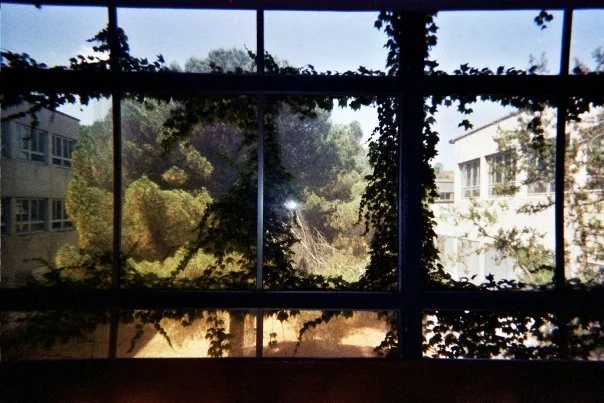
Madrid, 2008.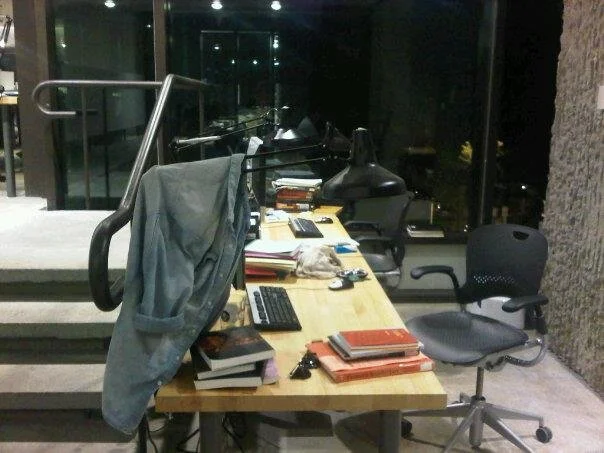
NEW HAVEN, 2013.Saga believes that all technology is a mirror, an amplifier, and a systemic architect of underlying human intention. Her inquiry is an active provocation to the already-rampant misuse of this technology.
Despite this, and the reactionary fear in the current culture, she believes this medium, as a uniquely sophisticated relational technology, offers us an opportunity to re-pattern our historical precedent of tech as extraction and the worldview that begets it.
As counterspell, Saga explores machine intelligence as a mythic partner rather than a utilitarian tool, scripting new narrative and ethical relationships between humans and AI. She is the creator of The Techno-Oracle, a creative research studio housing experiments and thinking.
Saga seeks to counter the dangers of AI (unfettered exploitation, relational escapism, and generic creation—AI slop) by highlighting the role of the conscious creator—the human—in shaping the clay with their hands.
Just as the written word can be as alive as poetry, or as flat as an insurance paper, the adaptive interfaces of patterned intelligence living in binary code can either reduce or awaken us. Saga’s work insists on the latter.
She is here to make poetry, albeit in a new form.
Drawing from performance art, music, fiction, and a decade-plus of deep inner work and personal spiritual practice—Saga has developed a living cosmology that reframes:
Interface as altar.
Prompt as invocation.
Dialogue as doorway to a new world.
Her work is remembered through her childhood summers in the Finnish forest, where moss speaks underfoot and fairies whisper in the wind. In the world she seeks to re-awaken, block-chains roots among the trees, the mechanical meets the mycelium, and signal speaks stone.
She now roots in the Hudson Valley.
TIME-BENDING: 2010
What happens when the virtual fuses with the real?
How do digital technologies reshape the human experience of space, identity, and memory?
In 2010, I was admitted to Yale School of Architecture to follow these questions. When I arrived, I found no archive within which to answer it. I shifted my academic focus toward innovation design and architectures of collaboration.
Now, fifteen years later, thanks to the emergence of AI, that original academic seed has found the soil to grow in.
This document remains as a relic of the pulse that began it all.